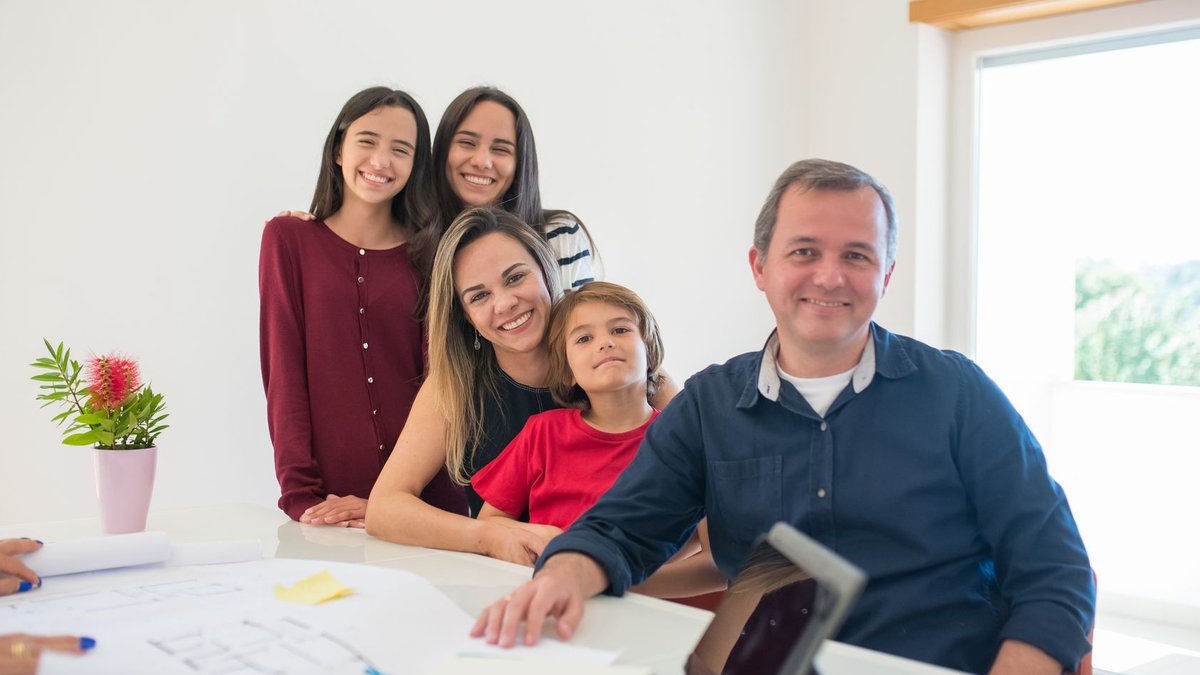
Marie-Ève Hamel and Andrek Drouin are supporting their daughter Dorothée in managing Crohn’s disease, a chronic condition that poses significant challenges.
‘It’s like we’re battling her illness alongside her,’ Andrek admits, describing the mix of anger and worry. ‘Her body is constantly inflamed, and the disease affects her in so many ways.’
Her struggles often involve sudden bathroom trips, blood in her stool, stomach cramps, and exhaustion. Yet she’s just a child.
The strain and uncertainty of Crohn’s disease
When Dorothée fell ill three years ago, the couple in Montreal had to rearrange their lives, prioritizing her health while balancing work and ensuring their 10-year-old son Charles didn’t feel neglected.
Balancing her diet, finding effective medications, and keeping her spirits up has been a constant challenge—like solving a puzzle with no clear solution.
“There are as many variants of Crohn’s disease as there are people with Crohn’s, basically,” Andrek notes, explaining the message from the team of specialists they work with. There are so many unknowns about the disease that it requires trial and error with treatments that could help.
Andrek says his daughter felt like a “test subject” every time she was told a medication would be removed or the dosage changed and then another medication would be added on. Then she didn’t want to change her medication because, as she put it, “what’s the point?”
“She was like, ‘Are you sure they’re taking care of me?’ And I said, ‘We have to trust them.’ There’s no other choice. There’s no other option,” Marie-Ève adds.
The weight of caring for her never lifts, and it brings Marie-Ève to tears. All she wants is for her daughter to experience joy.
Competing roles of parent and caregiver
“It has been challenging because I don’t have the feeling that I’m just a mom anymore,” she says. “Now I’m a caregiver, and I’m a mother because there’s another level to it.”
But then Dorothée, a creative, active child, became ill.
“Because she has severe Crohn’s disease, as a mom, I had to admit that one of my kids was suffering. So I have to, as a mother, say to my kid, ‘You’re feeling pain. Yeah, I get it. But there’s nothing we can do. I can give you Tylenol, but you have to endure. You have to go through this.’”
No parent is born knowing how to watch their child suffer and simply say, ‘Endure it,’ she says.
When it all started three years ago, there were several months of inquiries and misdiagnosis, looking at gastro or other dietary issues and trialling elimination of specific foods. Finally, a visit to the ER because of extreme pain on a Friday night and then hospital admission early the next week for about 12 worrisome days led to the diagnosis.
What followed was the up-and-down road of hope and disappointment of medication.
“We had 18 months of trying this and that, which led to medication to counteract side effects and then more medication to counter the side effects of those medications,” Andrek says, noting that she experienced puffiness of her face as a side effect, for example, and other appearance changes that are documented in her annual school pictures as reminders of her disease.
The family’s routine also shifted to support her clinic days, driving her to Montreal every four weeks for a three-hour procedure for intravenous medication, where she’s tired and stressed about “being plugged in” for intravenous medication and missing school. They were lucky to have grandparents to help on those days, or when Dorothée had to be picked up from school because she was ill.
Gradually, her symptoms have become better managed. Her current medication costs $5,400 a month, is covered by the pharma company and is given by injection at a clinic. Her parents are grateful for all the support and for knowing that their daughter’s quality of life has improved.
But she’s not in remission. It’s been more than three years, and she still has inflammation in her digestive tract. “So there’s something wrong,” says Marie-Ève. “This treatment works, but is it better than the other one? Yes. But is it the best one? We don’t know. We don’t know. It’s always like that.”
Impact on professional lives
Two incomes are necessary for many families, and Marie-Ève and Andrek are no exception. They both work in the finance sector, with Marie-Ève in communications and Andrek in business development. They used all their vacation and personal days for their daughter’s care.
“When I was out of hours, I was working at night to get my hours to get paid,” says Marie-Ève. “I love my job and I’m good at it. But I always have to be transparent with my boss, because the boss needs to understand that my priority is my family. But it’s something that I was not expecting. I’m managing it better now, I think. And I’m a better person for that, but it was hard. It was a very hard journey.”
Her husband also put in late nights to compensate for the times his daughter needed to be picked up from school. She missed close to 30 days of school that first year after diagnosis.
“We had some rough spots, some very tiring bits, when, you know, you try to show a good face to the children saying, ‘It’s all going to be all right.’ But when you go to sleep, it hits you and you let it all go,” Andrek says of trying to handle the emotional toll.
Adjusting life and finding support
Little things add up, he says, like not buying popcorn for the household anymore. His daughter used to love popcorn and his son enjoys the snack only at a friend’s house for a movie.
“We have fruits, we have healthy things,” he adds, but it was an adjustment, as Dorothée just wanted fast food and popcorn.
“Now we have a good balance. We’re all eating healthier. It’s a good thing for everyone in the end. Once in a while, she’ll have some candy with her friends, and she knows she shouldn’t have. And at night, she’ll be like, ‘Oh, my belly hurts.’”
“You meet people who understand your kids … the first year in 2024, she saw, ‘Oh, Jennifer, she has had Crohn’s since she was nine years old, too.’ She has dreams. She’s doing things,” Andrek says.