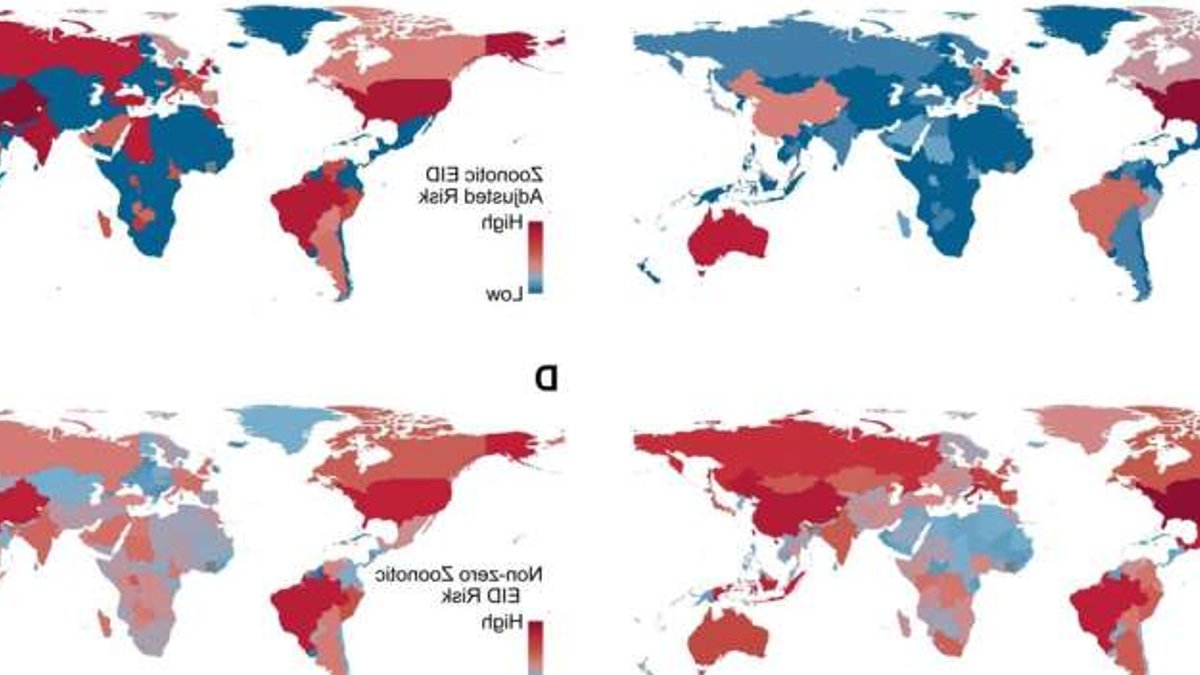
New research published in the journal One Health reveals a strong link between wildlife imports and the risk of zoonotic disease outbreaks. The study, conducted by researchers at Xi’an Jiaotong-Liverpool University, analyzed data from 214 countries over 39 years. This full analysis marks the first global attempt to measure the connection between wildlife trade and zoonotic disease outbreaks over time, offering critical insights into the drivers of emerging infectious diseases (EIDs).
The findings show that countries importing more wildlife face higher odds of zoonotic EID outbreaks. A one-unit increase in wildlife import volume is associated with a 23% higher chance of such an event. Specifically, the odds ratio was 1.23, quantifying the increased risk with statistical precision. This highlights the significant role of wildlife trade in facilitating the spillover of pathogens from animals to humans.
Global study links wildlife trade to disease outbreaks
This research, titled “Exploring the Impacts of Wildlife Trade on Zoonotic Spillover and Disease Outbreaks: A Multiple-perspective Study”, fills a critical gap in understanding the relationship between wildlife trade and zoonotic diseases. Dr. Lingyun Xiao, a corresponding author, notes that while previous studies explored factors like population growth and climate, wildlife trade volumes remained untested. The study’s innovative approach involved analyzing both the volume and direction of wildlife trade, distinguishing between imports and exports to uncover their unique impacts on disease risk.
The team employed two statistical methods to ensure robust findings. The first examined the relationship between wildlife trade volume and the likelihood of reporting zoonotic EIDs, while the second focused on extreme cases, investigating whether years of high wildlife trade coincided with severe outbreaks. This dual approach allowed researchers to validate the link between trade and disease outbreaks under both normal and extreme conditions.
Imports pose greater risk than exports
The study found that higher wildlife import volumes significantly increase the odds of zoonotic EID occurrence, while wildlife exports showed no such association. Kai Wang, a Ph.D. student involved in the research, explains that imports may introduce novel pathogens, triggering outbreaks that might not otherwise occur. This asymmetry shows the unique risks associated with bringing wildlife into new environments, where local populations may lack immunity to exotic pathogens.
Related Post: Two APOL1 Variants Increase Kidney Failure Risk
Importantly, while import volume raises the chance of an outbreak, it doesn’t influence the frequency of cases once an outbreak happens. Other factors, such as containment measures and public health response, play a role in determining the number of cases. This distinction highlights the need for targeted interventions at the point of importation rather than relying solely on post-outbreak management.
Extreme outbreaks linked to high import volumes
The analysis revealed a striking pattern: countries with very high wildlife imports tend to experience a high number of zoonotic outbreaks. Dr. Chengxiu Ling, another corresponding author, highlights that extreme zoonotic EIDs are 40% more likely in countries with high wildlife import volumes. This finding emphasizes the disproportionate impact of wildlife imports on severe public health events, which often have the greatest societal and economic consequences.
The study also identified additional risk factors, including mammalian diversity, population density, and population growth. These findings paint a picture of import-driven risk, where wildlife importation is linked to both the probability of outbreaks and extreme events. By integrating multiple risk factors, the research provides a holistic understanding of the drivers of zoonotic diseases.
Recommendations for pandemic prevention
According to Ling, the policy focus should be on importation points. While wildlife exploitation and human-wildlife encounters are broader concerns, the study suggests that the intensity of wildlife importation poses a more direct zoonotic risk. By concentrating efforts on import checkpoints, policymakers can address the most immediate and actionable drivers of zoonotic disease outbreaks. Kai Wang et al., in their study published in One Health (2026), conclude that such targeted interventions are essential for global health security. DOI: 10.1016/j.onehlt.2026.101565.