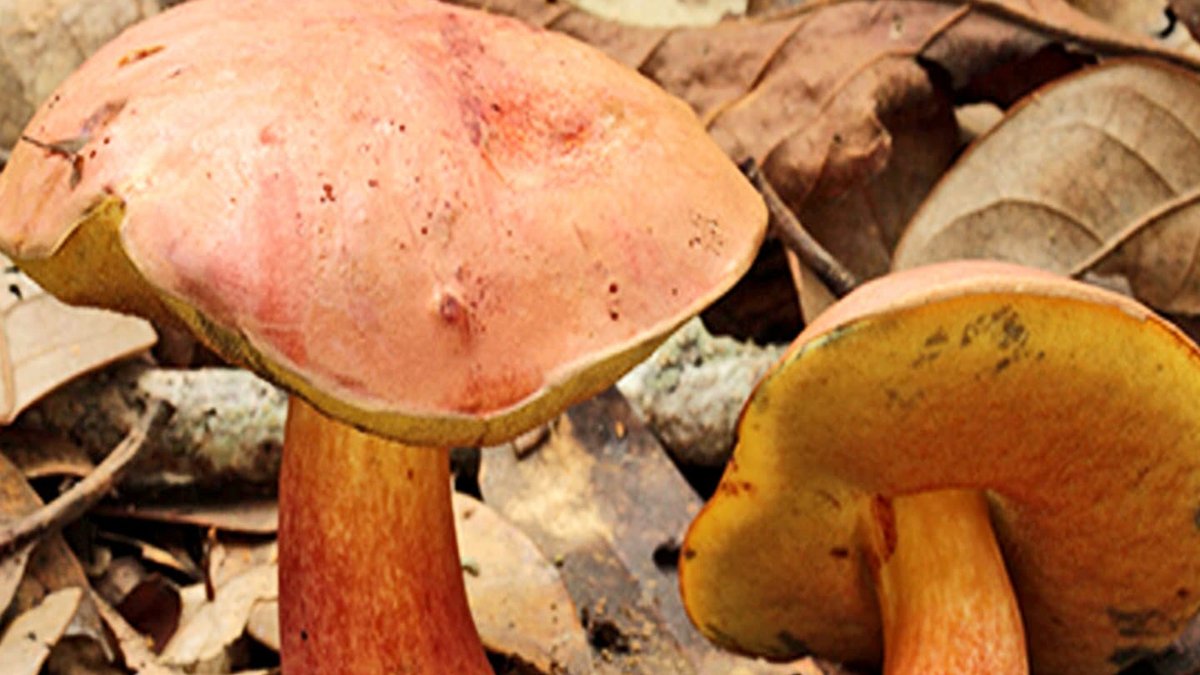
A mushroom in the Lanmaoa genus is linked to hallucinations of tiny people across different cultures in Asia.
The 1934 Reports
Western scientists first heard reports from Papua New Guinea in 1934 about people hallucinating tiny humans after eating wild mushrooms, a phenomenon they dubbed “mushroom madness.” Anthropologists and mycologists traveled to the region in the 1950s and 1960s to investigate. They narrowed the culprit to a few species in the Boletaceae (bolete) family and sent samples to Albert Hoffman, the scientist who first isolated psilocybin and discovered LSD. Even Hoffman could not find an active compound in the samples. Eventually, researchers concluded that the mushrooms might not be bioactive at all, suggesting the hallucinations were simply a sociocultural phenomenon, and research largely ended in the 1960s.
A Second Occurrence in China
Decades later in the 1990s, reports emerged from Yunnan in Southwest China of a similar phenomenon after people ate bolete mushrooms. The species was not clear, but mycologists suggested that it might be L. asiatica, a newly described mushroom at the time. This fungus, known locally as “Jian shou qing,” is a culturally important edible mushroom that reportedly produces the visions when undercooked.
Related: Circumcision not linked to autism risk
A Third Occurrence in the Philippines
In 2024, accounts surfaced from an Indigenous community in the Philippines’ remote Northern Cordillera region. They were consuming a wild mushroom called “Sedesdem,” which, according to local knowledge, occasionally caused visions of little people. The researcher visited Yunnan and the Philippines, speaking with locals and collecting specimens of L. asiatica and Lanmaoa genus fungi for DNA sequencing. This marked the first scientific survey of Northern Philippine fungi ever conducted.
Analysis revealed that the China’s Jian shou qing and the Philippines’ Sedesdem were both L. asiatica, which was surprising because at the time, it was believed the species only occurred in China. Unfortunately, a trip to Papua New Guinea was prevented by unusually dry conditions, which stopped the team from collecting specimens for comparison.
Three independent cultures have now reported the same specific type of hallucination, and two cases are attributed to the same DNA-verified mushroom species. That indicates that these bizarre psychological effects aren’t cultural manifestations or coincidences; they must have a shared underlying chemical and neurological basis.