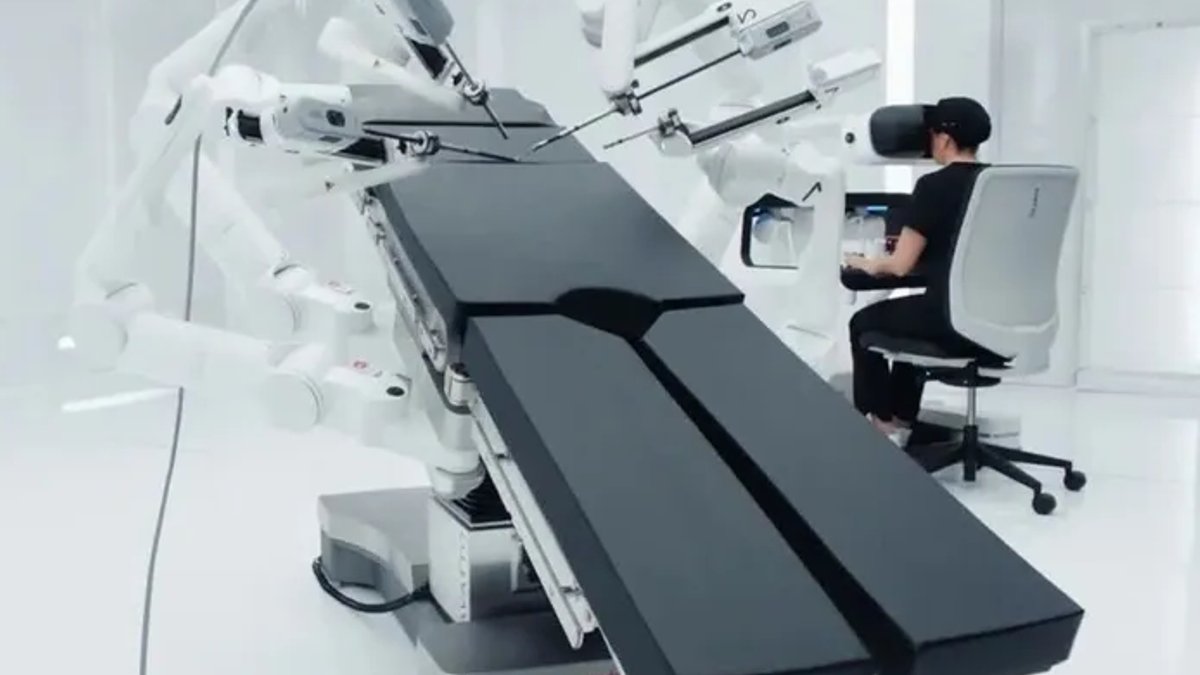
Johnson & Johnson received Food and Drug Administration authorization for its Ottava soft tissue surgery system, positioning the medical device maker to compete with Intuitive Surgical’s da Vinci robot. The FDA granted de novo authorization for the system to perform multiple procedures in general surgery, marking the entry of a second major competitor into the U.S. market following Medtronic’s clearance in late 2025. A wave of smaller companies, including CMR Surgical, Distalmotion, and Moon Surgical, are also launching robotic systems in the U.S., giving Intuitive its first direct competition in more than two decades.
Robotics integrated into the table
Ottava is the first soft tissue system to integrate robotic arms directly into the operating table. J&J said the device takes up 30% to 50% less space than traditional boom- and cart-mounted systems. The smaller footprint is intended to help hospitals streamline workflows and increase operating room efficiency. Synchronized table and robotic arm motions facilitate patient repositioning and multi-quadrant access to the anatomy. The system includes instrument innovations for commonly used surgical tools and connects to a digital platform for surgical data integration.
Related: Philips secures FDA approval for pulse oximeter
The FDA’s general surgery authorization covers a range of procedures, including Roux-en-Y gastric bypass, gastrectomy, cholecystectomy, splenectomy, gastric sleeve, small bowel resection, appendectomy, fundoplication, hiatal hernia repair, and lysis of adhesions. A U.S. clinical trial is also underway for Ottava in inguinal hernia repair. J&J said it will launch Ottava with select U.S. customers while working to obtain additional indications and regulatory jurisdictions over time.
Slow path to market share
Tim Schmid, J&J’s worldwide chairman for medtech, said the company is pioneering a new category of surgical robotics. “We are pioneering a new category of surgical robotics with OTTAVA,” he said in a statement. Hani Abouhalka, J&J’s group chair of medtech surgery, added that surgical robotics will play an increasingly important role in surgical care, but noted that what defined the last 25 years of surgery will not define the next 25.
Related: Tempus Agrees to Buy Personalis for 1 Billion
Stifel analyst Rick Wise noted that the authorization came well within J&J’s projected timeline of before year-end and just six months after the company filed its FDA submission. The approval process was relatively quick for a de novo approval. However, Wall Street analysts were skeptical of Ottava’s ability to gain ground on da Vinci in the near term.
The robot’s launch “will almost certainly take a deliberate and phased approach, significant training (physicians and staff) will be required, and the indications for OTTAVA are still limited,” Wise wrote to clients. “But with this approval, [J&J] is now ‘in the game’ and can iterate and improve on Ottava over time, potentially building towards a system that is closer to directly competing with Intuitive’s broader offering.” J.P. Morgan analyst Robbie Marcus said Ottava’s smaller footprint and unique bedside attachment are interesting selling points. He expected Intuitive to see “very modest/immaterial” loss in market share over time.