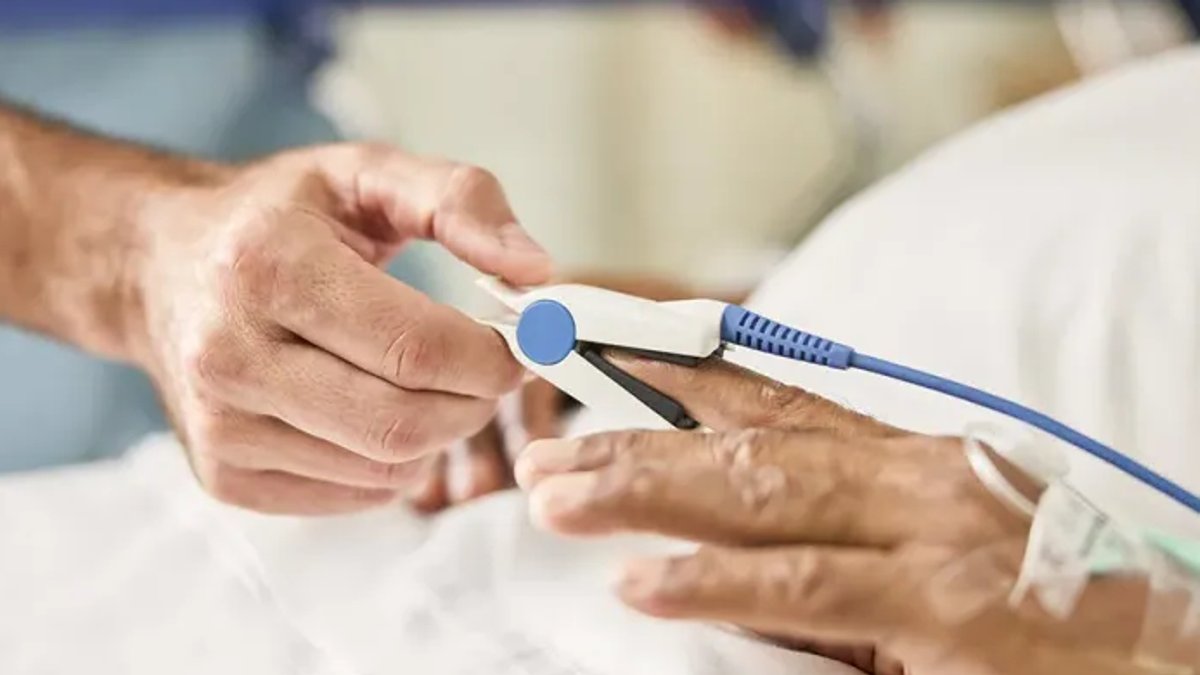
Philips has received clearance from the Food and Drug Administration for a new pulse oximeter designed to deliver accurate oxygen saturation readings across different skin tones. The update aims to address long-standing concerns about racial bias in these devices.
Accuracy improvements follow regulatory scrutiny
The company’s updated SpO₂ clip sensor, which measures blood oxygen levels, secured 510(k) clearance. The reusable device includes optical refinements to improve signal quality and consistency.
Sachin Chaudhari, Philips’ category leader for clinical measurements and specialty monitoring, stated that the company began evaluating its pulse oximeter performance after the COVID-19 pandemic exposed disparities in accuracy. Though initial assessments found the devices performed reliably, Philips saw room for improvement and developed the updated sensor.
The new device underwent desaturation studies to measure how closely its readings matched actual blood oxygen levels. It achieved an accuracy root mean square (Arms) value of 1.6%, nearly twice as precise as the 3% threshold recommended by the International Organization for Standardization and recognized by the FDA.
Accuracy differed by less than 0.5% between people with light and dark skin tones, a result that stands in contrast to earlier research. Studies in journals like the New England Journal of Medicine and JAMA found pulse oximeters were three times more likely to miss low oxygen levels in Black patients compared to white patients, often leading to delayed treatment.
Regulators have responded to these findings. The FDA issued a 2021 safety communication about pulse oximeter inaccuracies, followed by draft guidance in early 2025 proposing stricter testing requirements. The guidance suggested studies include at least 150 participants with varied skin tones, but it remains unfinished, leaving manufacturers to adjust to changing expectations.
Related: Choosing the Best Custom Stencils From Stencil Giant
Philips is not alone in updating its technology. Medtronic received FDA clearance last month for an improved Nellcor system, which met or exceeded the agency’s proposed accuracy standards across all skin tones.
Testing standards remain a moving target
The new sensor was validated through a program that evaluates performance across diverse patient groups and clinical conditions. Philips plans to launch the device in certain markets around the world later this year.
The effort to improve testing reflects broader concerns about how medical devices are evaluated. Historically, clinical trials have excluded many people of color, resulting in technologies that perform poorly for entire populations. Pulse oximeters, which use light absorption to estimate oxygen levels, are especially affected by skin pigmentation because melanin can interfere with sensor readings.
The FDA’s draft guidance, released in early 2025, was seen as a step toward closing these gaps. With the document still unresolved, companies like Philips are proceeding with their own validation programs. Chaudhari noted that Philips’ work began before the FDA’s guidance was published, showing some firms are acting independently of regulatory timelines.
The device joins a small but growing group of pulse oximeters marketed as accurate across skin tones. Its impact on clinical outcomes will depend on both design and proper use in practice.
Earlier this year, Tempus agreed to acquire Personalis in a deal valued at $1 billion, reflecting another push for precision in medical diagnostics.